Waste plastic chemical recycling is embracing policy opportunities in 2026. Vary Tech, in partnership with Germany‑based Evonik and SupeZET, launched a joint process package for producing high‑quality PPO and circular naphtha via waste plastic chemical recycling at IFAT Munich 2026. By leveraging its 6th‑generation oxygen‑free pyrolysis technology, the enterprise addresses bottlenecks in recycling low‑grade waste plastics and builds a closed‑loop supply chain of high‑value petrochemical feedstocks across the globe.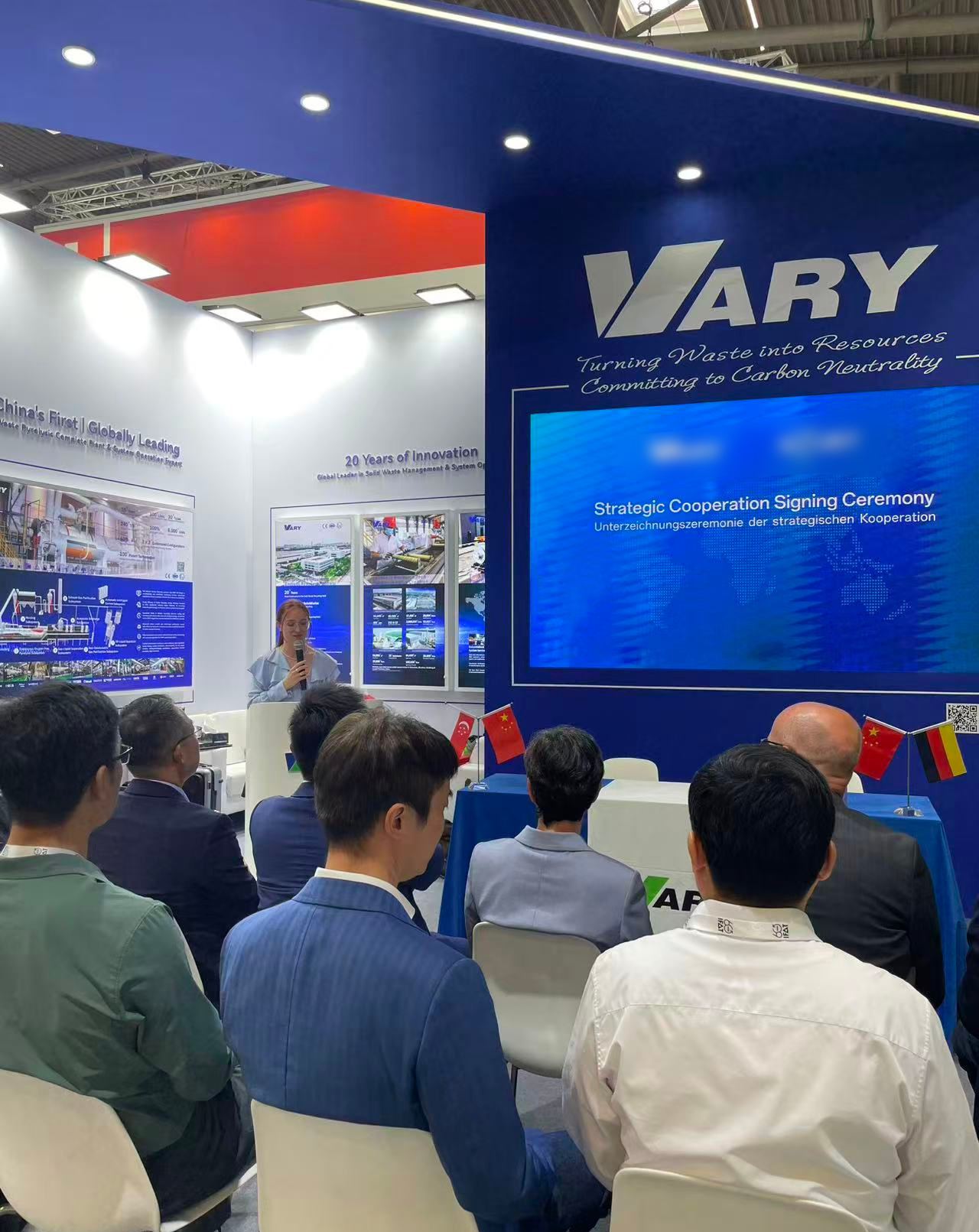
The renewable resources industry reached a historic turning point at the start of 2026. With the implementation of the Action Plan for Promoting the Application of Recycled Materials jointly issued by seven Chinese government authorities, support for the industrial application of waste plastic chemical recycling among leading enterprises has been explicitly proposed. This marks the official shift of waste plastic treatment from traditional physical recycling to an era of chemical upgrading with molecular‑level decomposition.
As a world‑leading system service provider for solid waste resource utilization, Vary Tech delivered a remarkable Chinese solution at the recently concluded IFAT Munich 2026. Partnering with German chemical giant Evonik and China’s petrochemical plant integrator SupeZET, Vary Tech officially released the full‑chain joint process package for producing high‑quality PPO (Plastic Pyrolysis Oil) and circular naphtha through waste plastic chemical recycling, injecting strong momentum into the global low‑carbon economy.
Bottlenecks of traditional physical recycling are prominent. Downcycling prevents waste plastics from re‑entering high‑end manufacturing supply chains, while massive low‑value waste such as take‑away food containers and laminated packaging constitutes a major pain point in urban solid waste treatment.
Chemical recycling, explicitly encouraged by the Action Plan for Promoting the Application of Recycled Materials, is the key to eliminating the low‑grade label of waste plastics. Through chemical recycling technologies including pyrolysis and depolymerization, low‑value, mixed and mechanically unrecyclable polyolefin (PP/PE) waste plastics are converted into monomers or oils, realizing a true closed loop from waste plastics to plastic products.
Furthermore, with stricter environmental law enforcement and long‑term special national treasury bonds tilted toward high‑tech resource recycling projects, the industry is accelerating its concentration toward leading enterprises with technological barriers and compliant production capacity. More importantly, chemical recycling cuts carbon emissions by approximately 1.5–2 tons per ton of waste plastics compared with incineration. Against the backdrop of CCER (Chinese Certified Emission Reductions) restructuring, the green and carbon‑reduction value of plastics is being revalued by the global market.
Amid the accelerated implementation of stringent global plastic recycling regulations, including the EU PPWR (Packaging and Packaging Waste Regulation), revised EU ELV (End‑of‑Life Vehicle) Directive, France’s AGEC Anti‑Waste and Circular Economy Law, India’s Plastic Waste Management (Amendment) Rules 2026, and the Global Plastics Treaty, market demand for stably supplied and compliant high‑quality chemical feedstocks has surged. The joint process package released by Vary Tech, Evonik and SupeZET is specially designed to fill global market gaps in circular naphtha.
This full‑process chain forms a perfect closed loop of raw material pretreatment, continuous pyrolysis, deep purification and refining, and product off‑take.
Vary Tech’s pyrolysis system stably produces PPO (Plastic Pyrolysis Oil). The yielded PPO undergoes deep refining via Evonik’s proprietary Rocket process module for pyrolysis oil upgrading and impurity removal, as well as SupeZET’s advanced hydrogenation and fractionation modules, ultimately generating circular naphtha and high‑quality PPO that meet the standards required by global petrochemical enterprises.
To accelerate industrialization, Vary Tech and SupeZET signed an agreement at the exhibition to jointly establish the industrial cooperation platform CARBON LOOP SYSTEMS PTE. LTD. in Singapore. A Memorandum of Understanding (MOU) was also signed with Evonik and Singapore‑based JE Synergy to launch Asia’s first closed‑loop demonstration project for municipal waste plastic chemical recycling in Singapore, supporting Singapore’s Zero Waste Masterplan.

Standing at the new starting point of the inaugural year of resource recycling in 2026, the second life of waste plastics is emerging. Vary Tech will continue to provide scalable, economical and sustainable solutions, injecting strong momentum of Chinese technology into global climate action and circular economy goals.


