Against the backdrop of global joint efforts to tackle climate change, the aviation industry is facing unprecedented challenges and opportunities in its decarbonization journey. As a sector that cannot achieve comprehensive carbon reduction through electrification in the short term, Sustainable Aviation Fuel (SAF) has become a core solution for the global civil aviation industry to reach net-zero emission goals.
This article analyzes the definition of SAF, mainstream technical pathways, domestic and international industrial policies, and focuses on a cutting-edge technology of great interest — producing SAF from waste-tyre pyrolysis oil. Combined with Vary Tech's innovative technologies, it explores how Chinese innovation injects new momentum into the circular economy and green aviation.
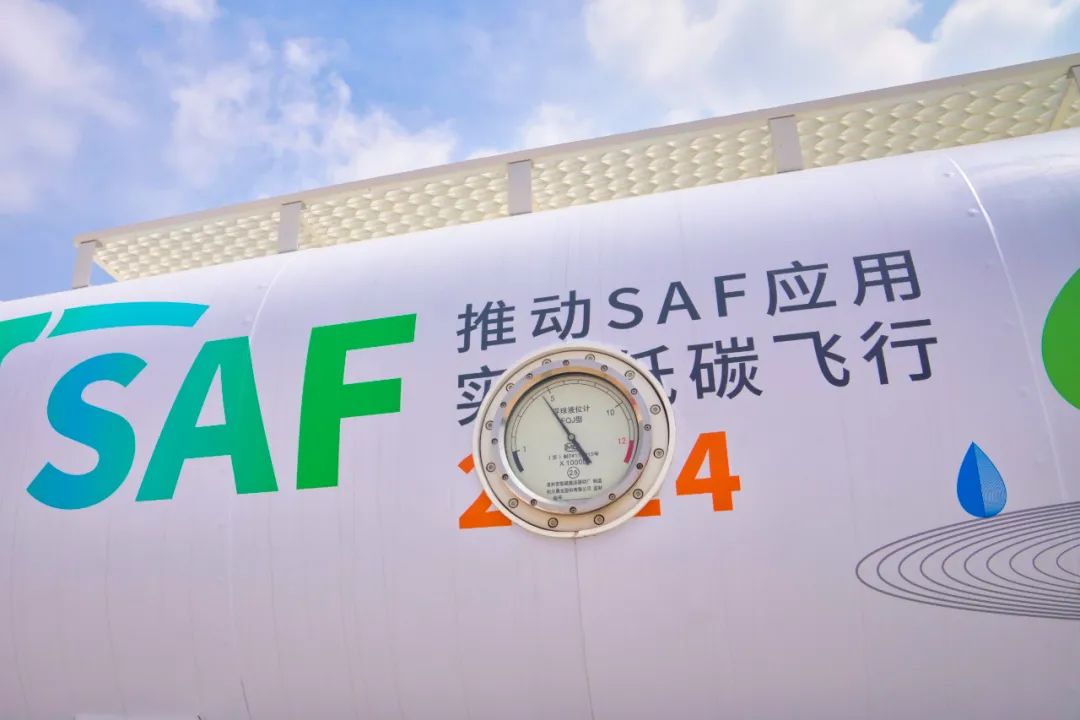
What is Sustainable Aviation Fuel (SAF)?
Sustainable Aviation Fuel (SAF) refers to aviation fuel produced from renewable resources or waste materials (such as waste oils, agricultural and forestry residues, municipal solid waste, etc.) that has obtained airworthiness certification and sustainability verification.
With energy density and volumetric density basically consistent with conventional jet fuel, SAF is fully compatible with existing aircraft and civil aviation infrastructure (i.e., plug-and-play), delivering outstanding compatibility.
Meanwhile, compared with traditional jet fuel, SAF reduces whole-life-cycle carbon emissions by at least 50% and up to 85%, boasting remarkable carbon-cutting effects.
In China, developing SAF is not only a key pillar for civil aviation to implement the national dual-carbon strategy, but also an important driver for industrial upgrading and fostering new quality productive forces.
Global and Chinese SAF Markets: Rapid Expansion Driven by Policies
As carbon-reduction targets set by the International Civil Aviation Organization (ICAO) draw near, especially with the mandatory enforcement of the Carbon Offsetting and Reduction Scheme for International Aviation (CORSIA) starting in 2027, countries worldwide are rolling out intensive incentive and mandatory policies for SAF.
1. Strong Global Market Momentum
Europe: The EU's ReFuelEU Aviation Regulation stipulates the minimum SAF blending ratio for aviation fuel supplied to EU airports starting from 2025. The UK also plans to achieve a 10% SAF blending ratio by 2030.
America: The United States offers substantial tax credits and subsidies for SAF via policies including the Inflation Reduction Act.
Driven by global policies, global SAF output reached 1 million tonnes in 2024 and is projected to double to approximately 1.9 million tonnes in 2025.
2. Milestones of China's SAF Industry
China began research and development of bio-jet fuel in 2009 and has now become the fourth country worldwide to master this technology. Recent years have witnessed an explosive period for the commercial application of SAF in China:
Policy Target: The 14th Five-Year Plan of the Civil Aviation Administration of China sets a target of 50,000 tonnes of SAF consumption and launches extensive SAF application pilots.
Commercial Flights: Airlines including Air China, China Eastern Airlines and China Southern Airlines have officially used SAF on multiple flights; Sichuan Airlines and SF Airlines have successively completed their first commercial passenger and cargo flights powered by SAF.
Domestic Large Aircraft Trial: China's home-grown large aircraft C919 and regional jet ARJ21 have successfully completed their first demonstration flights using SAF (fuel converted from waste cooking oil with a 40% blending ratio).
Innovation Breakthrough: Broad Prospects of SAF Production from Waste-Tyre Pyrolysis Oil
There are 11 SAF production technology pathways certified by standards issued by ASTM International (American Society for Testing and Materials).
As defined by the EU's Renewable Energy Directive (RED), aviation fuel can only be classified as SAF if its whole-life-cycle carbon emissions are at least 65% lower than the fossil-fuel baseline. It is evident that SAF must comply with both technical requirements and carbon-footprint standards.
The industry is actively exploring wider waste feedstocks for SAF production. Among them, waste-tyre-to-fuel via pyrolysis is emerging as a highly promising breakthrough pathway.
1. International Precedent: £100 Million Tyre-to-Fuel Plant in the UK
Internationally, Wastefront started construction of a £100-million tyre-to-fuel plant in Sunderland Port, the UK, in 2025. The plant is expected to process approximately 10 million end-of-life tyres annually, converting them into tyre pyrolysis oil (TPO) via advanced pyrolysis technology for further refining into SAF. It provides a practical solution to the severe waste-tyre problem and fills the production capacity gap of SAF.
2. Chinese Expertise: Industrial Empowerment of Vary Tech's Waste-Tyre Pyrolysis Technology
Chinese environmental technology enterprises are also at the global forefront in exploring the conversion of waste tyres into high-value SAF. As a leading solid-waste-resource-utilization enterprise, Vary Tech has achieved breakthroughs in waste-tyre pyrolysis technology and equipment manufacturing, laying solid underlying technical support for expanding SAF feedstock sources.
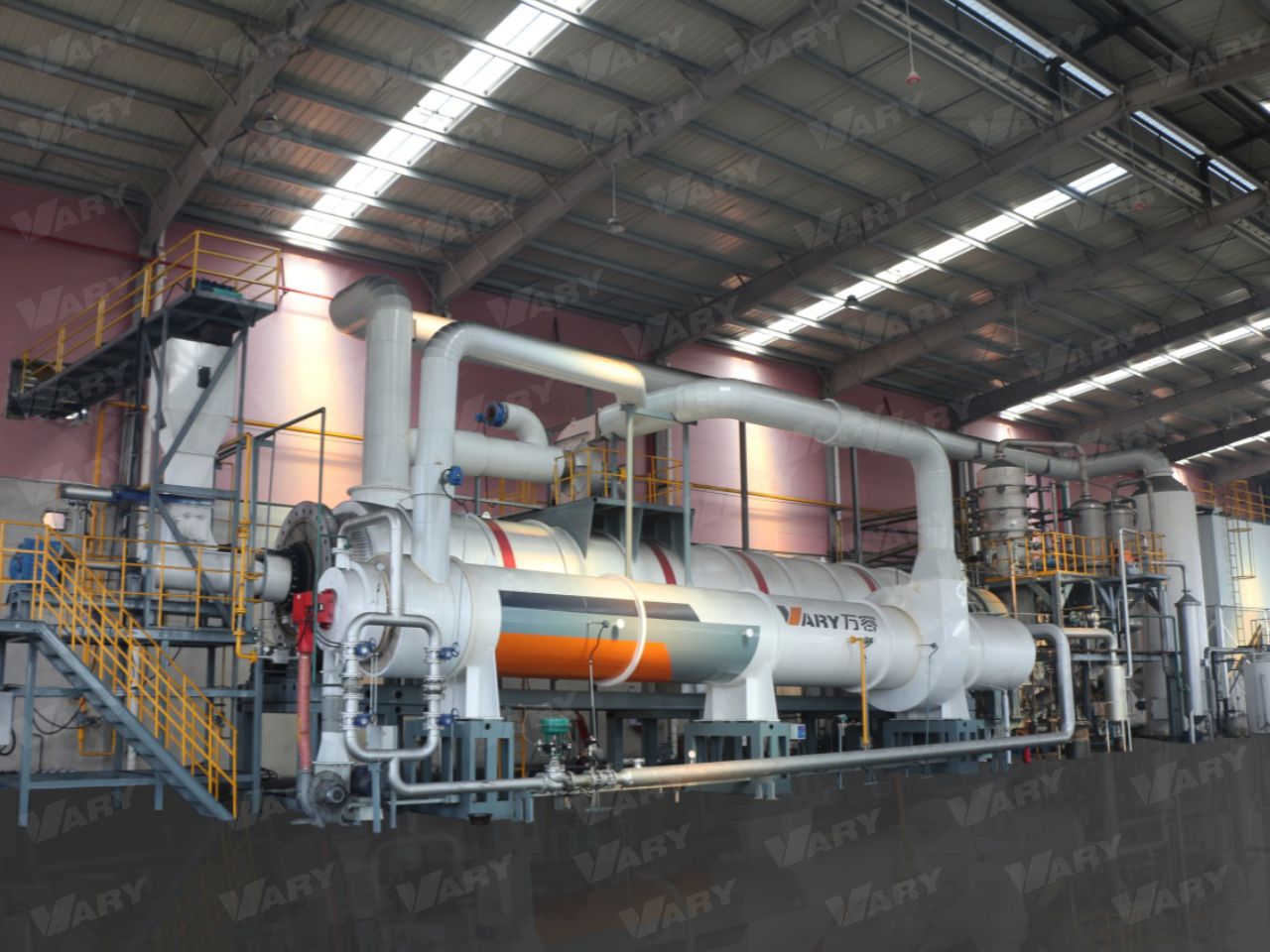
Continuous Oxygen-Free Pyrolysis Technology
Vary Tech's self-developed waste-tyre pyrolysis technology features core designs including modular flexible sealing, continuous feeding and discharging, automatic decoking devices and equipment optimization, enabling stable annual operation for 8,000 hours.
High-Quality Pyrolysis Oil Output
High-quality pyrolysis oil is a prerequisite for refining SAF. Equipped with an efficient quenching three-phase separation system, multi-stage combined processes and precise temperature control, Vary Tech's integrated oxygen-free pyrolysis equipment realizes efficient separation of pyrolysis gas, pyrolysis oil and pyrolysis carbon, reduces polymerization reactions, and extracts tyre pyrolysis oil (TPO) at a high yield. After subsequent hydrotreatment and upgrading modification (e.g., pyrolysis-hydrotreatment pathway), such pyrolysis oil can be converted into SAF that meets international airworthiness standards.
Fully Circular Economic Model
Apart from pyrolysis oil, Vary Tech's process co-produces high-quality eco-friendly carbon black and steel wire. Non-condensable combustible gas generated during pyrolysis is recycled as heat for the system itself. This zero-waste model turns waste tyres — the so-called "black pollution" — into green energy, perfectly aligning with the refining industry's shift to integrated energy suppliers.
Vary Tech's pyrolysis technology lays a foundation for large-scale domestic SAF production and greatly enhances China's independent supply capacity in the green aviation manufacturing industrial chain.
Future Technology Roadmap for SAF
Faced with the urgent demand for civil aviation decarbonization, the industry has outlined a clear evolution blueprint from waste-oil utilization to solid-waste conversion and further to hydrocarbon synthesis, based on feedstock availability and technological maturity of different pathways.
Short-Term (by 2035): Dominance of Mature HEFA Technology
As the most widely airworthiness-certified, technically mature and relatively cost-effective pathway globally, the Hydroprocessed Esters and Fatty Acids (HEFA) process will underpin China's SAF industry. This stage focuses on improving the closed-loop collection system for waste oils (waste cooking oil) and rapidly scaling up production capacity by utilizing existing refinery hydrotreating facilities.
Medium-Term (2035–2045): Large-Scale Rise of Chemical Recycling and Biomass Conversion (AtJ / G+FT)
With mandatory increases in aviation blending ratios, oil feedstocks will hit an annual resource ceiling of approximately 6 million tonnes.
Pyrolysis-Hydrotreatment Chemical Recycling: Continuous pyrolysis technologies for waste tyres and plastics represented by Vary Tech will serve as a vital supplement. Converting black pollution into high-quality pyrolysis oil followed by hydro-upgrading realizes resource multiplication of non-biomass waste materials.
Diversified Pathways: Biomass gasification-Fischer-Tropsch (G+FT) and Alcohol-to-Jet (AtJ) processes will enter large-scale commercialization, efficiently utilizing China's abundant biomass resources.
Long-Term (after 2045): Power-to-Liquid (PtL) as the Ultimate Decarbonization Solution
The PtL pathway synthesizes fuel using green hydrogen and captured carbon dioxide, completely breaking the physical limitations of biomass and waste feedstocks. With breakthroughs in renewable power generation costs and green hydrogen electrolyzer efficiency, PtL will become the absolute mainstay supporting the 2050 civil aviation net-zero emission target.
With Vary Tech's industrial continuous pyrolysis equipment at its core, waste tyres are transformed into Sustainable Aviation Fuel (SAF) through in-depth chemical recycling of pyrolysis-oil extraction and hydro-upgrading, reshaping the green energy landscape. With innovative breakthroughs in underlying pyrolysis logic, precise closed-loop high-end hydrotreating processes, and alignment with global carbon-footprint certification systems, SAF will not only act as a carbon-reduction engine powering civil aviation toward net-zero emissions, but also open up a trillion-dollar green productivity track driven by solid-waste recycling.


